Monday, September 5, 2016

The Druid's Circle


In May I visited one of the real places I used in my historical fantasy novel The Silver Wheel. The Druid's Circle is situated on on a hillside in North Wales high above the Irish Sea and dates to almost 5,000 years ago. There were no druids around then so the name is obviously recent. We also have no idea of the purpose of the circle, but it was presumably an important religious site since there are three ancient trackways leading to the area. 
To reach the Druid's Circle is a three mile hike, and much of the trail is very steep. It's also not terribly well-marked. I had to stop and ask directions three times along the way. Fortunately, despite its relative remoteness, the site is well-known. 
 
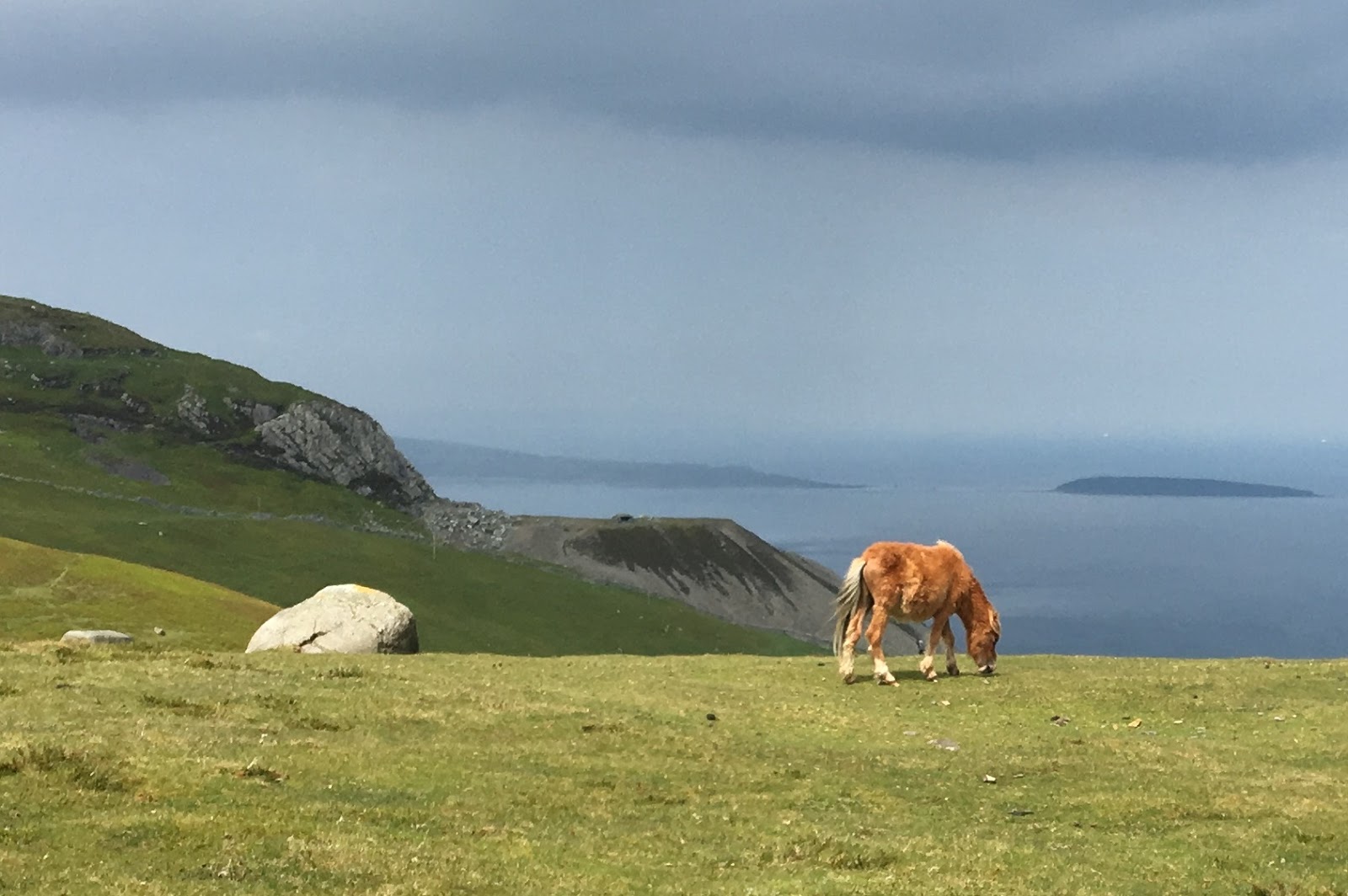
When I arrived at the circle, there was no one there except a few sheep and some very shaggy, wild Welsh ponies. 
 
 
When the site was excavated in 1957, they discovered a stone-lined chamber in the center of the circle, called a cist. The cist contained an urn holding the cremated remains of a child. A nearby pit contained another urn, also with the cremated remains of a child. It's possible the children were sacrificed. Or they might have died naturally and been buried there because of the sacred nature of the site.

The setting of the circle is spectacular, on a high ridge with a view of the sea in the distance.

And the wild Welsh hills all around.

When I was writing The Silver Wheel, I needed a real location in Wales where my heroine Sirona and her fellow drui Cruthin could hold a sacred ceremony. I discovered the Druid's Circle in a book on British megaliths and knew immediately it was the perfect spot for my characters to call down the power of the night sky to protect the spirit of the Celtic tribes in the upcoming battle with the Romans. 

Fifteen years after writing that book, I finally had a chance to visit the actual place where I had set my story, and found it just as magical and awe-inspiring as I had envisioned.

Monday, August 29, 2016

Beaumaris Castle

The last castle I visited on my trip to Wales was Beaumaris Castle. It has a impressive defense system, with a huge wall encircling the entire castle, and a moat that runs 2/3rd's away around that wall.The name Beaumaris comes from the Norman-French for "fair marsh".
 

Built by Edward the I between 1295 and 1300, the castle is located on the eastern side of the Isle of Anglesey, just off the northwest coast of Wales. The presence of the sea is very strong here. Given the castle's location on the edge of an island off a remote part of Wales, its massive impregnability seems like overkill. In fact, the castle never played an important part in history, so it's more a symbol of English might than anything else. 
  
From the other side of the castle you can see the mountains of Snowdonia.
The stonework of Beaumaris somehow seems more massive and formidable than other castles.
Now the stones are crumbling away due to the forces of nature. 
 
These days seagulls rule this realm.
 
Where kings and princes once walked, there are now only tourists. Like me.


Sunday, August 21, 2016

Harlech Castle

Harlech Castle rises up from a spur of rock above the Irish Sea. Like many Welsh castles, it was built by Edward I as part of his campaign to subdue the Welsh. But the history of the site goes back much farther than the medieval era. Harlech is linked to the classic Welsh tales of the Mabinogion, which opens with the king of Britain sitting by the Irish Sea at Harlech.

Harlech is very square, solid and impressive. The castle was nearly impregnable, with no easy way for an enemy to reach it.
When Harlech was built, it was much closer to the sea. A natural channel made it possible for boats to travel all the way up to the castle's moat.
There is still a stone staircase of 200 steps which once led down to the dock where ships dropped off supplies.
 
From the other side of the castle you can see the Welsh mountains in the distance. 


The castle was an important stronghold throughout the Middle Ages. It played a part in the Welsh uprising in the 1400's led by Owain Glywyr and also in the War of the Roses. 

 
My favorite part of Harlech was the towers. I climbed every one, so I could enjoy the sense of being on top of the world.
 
I also had a great time strolling through the village of Harlech, where I admired a beautiful ginger cat and was intrigued by a "soul food" restaurant with an impressively authentic American menu (they even serve black-eyed peas). Sadly it didn't open until the evening, by which time I was off on my next adventure. 

Thursday, August 11, 2016

Conwy Castle


I've driven by Conwy Castle at least a half dozen times during multiple trips to north Wales, so it was exciting to finally visit it.
 The castle is located at the mouth of the Conwy River on the north coast of Wales. (This view is from across the river.) Like so many north Wales castles, it was built in the era of Edward I. It only took four years to construct, which is amazingly fast for a castle of this size. It cost the modern equivalent of about 35 million dollars.


The castle has eight towers, four of them double.
The views in every direction are stunning.
 Magnificent as it is, all that's left of Conwy are the stone walls. You have to use your imagination to visualize what actually living here was like.


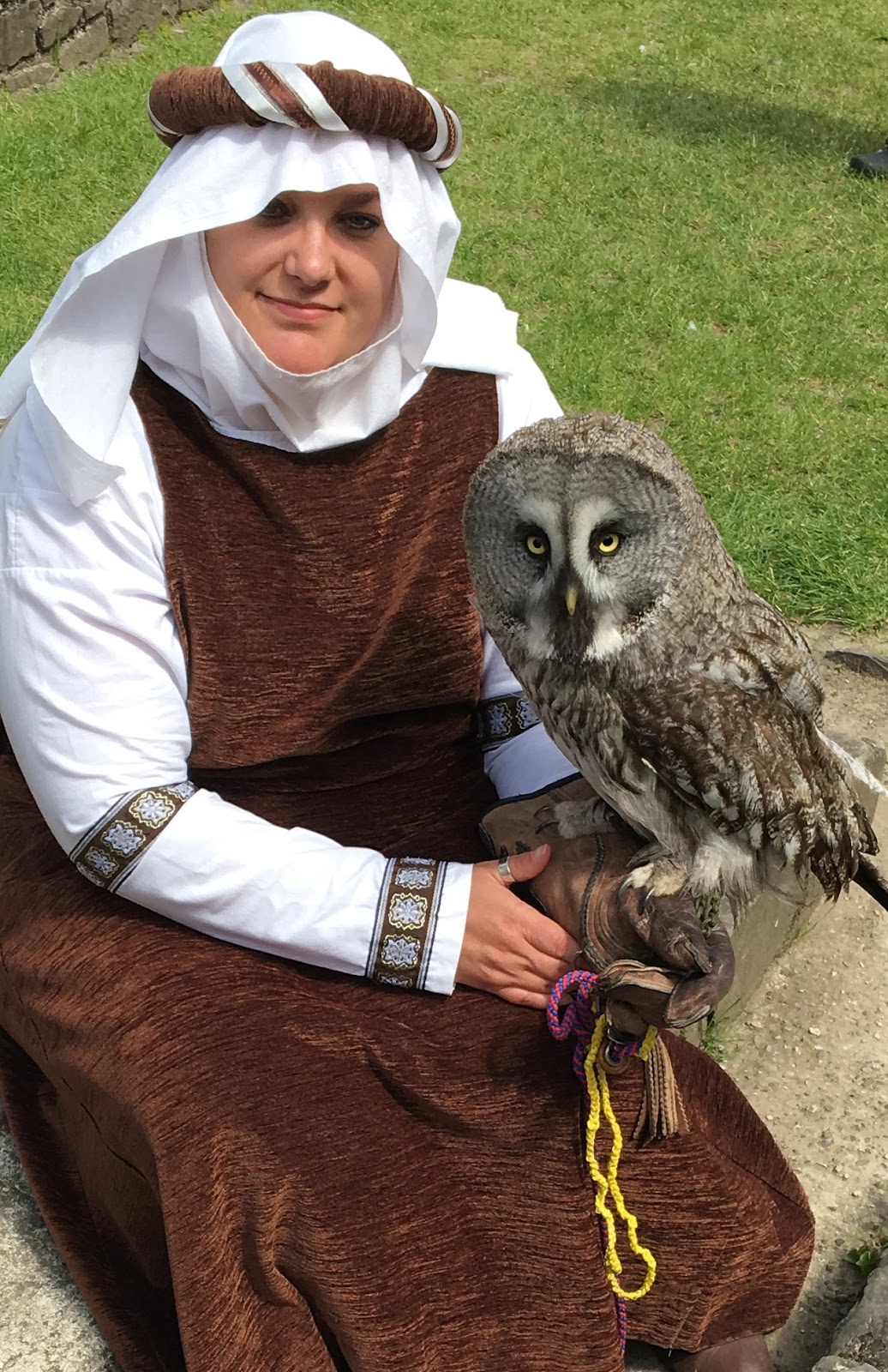
There was a display of several birds of prey and their handlers in the castle yard. Such beautiful creatures they are. So cool to see them up close.
This was my favorite of all the birds. Small but he/she has so much character.
The display of medieval weapons in the yard also contributed to the mood.
Maybe it was the hazy mountains in the distance, or the view of Deganwy Hill across the river (the setting for my dark age romance, Dragon's Dream), but Conwy was my favorite of all the castles I visited on this trip.

Nothing like a castle to transport you back in time!